
How has China exported its culture through AAA games?
The story of how a nation can turn its mythology, literature, architecture, fine arts, and history into an entertainment product capable of competing on the international market.
There was a time when, if people wanted to imagine China through popular culture, they would usually think of martial arts, historical dramas, tea culture, pandas, or Hong Kong cinema. But in recent years, another door has been opening at remarkable speed: video games.
And in that story, Black Myth: Wukong is a milestone that is difficult to overlook.
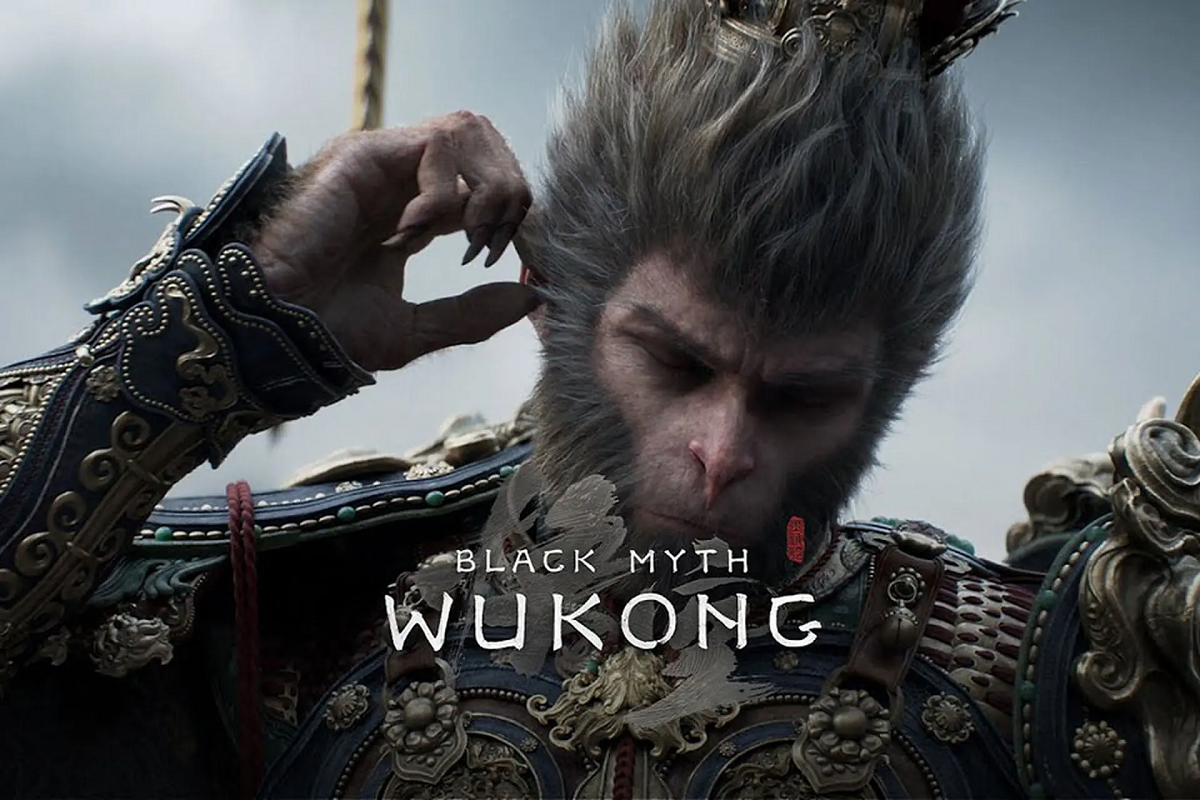
Released on August 20, 2024, Black Myth: Wukong quickly became a global phenomenon. Just three days after release, the game had sold more than 10 million copies. By mid-2026, a report from the Communist Youth League of China stated that global sales had surpassed 30 million copies, with more than half coming from overseas markets.
This is not simply the story of a best-selling game.
It is the story of how a country can transform its mythology, literature, architecture, visual arts, and history into an entertainment product capable of competing in the international market.
And perhaps most importantly: players are not merely buying the game. They are beginning to discover China.
From Sun Wukong to a World Players Want to Enter
Black Myth: Wukong is based on Journey to the West, a work deeply familiar to Chinese audiences and to many other Asian countries. But Game Science did not simply create a game adaptation that retells the story of Sun Wukong.
Instead, they took things that Chinese people had long been familiar with and rebuilt them through the language of modern AAA games.
Sun Wukong, monsters, Buddhism, Taoism, mountains, ancient temples, Buddhist statues, murals, weapons, and traditional art were brought into a large-scale 3D world, using graphics technology capable of competing with leading products in the console and PC markets.
That is the important point.
A book can tell readers that China has thousands of years of history.
A film can allow audiences to see an ancient temple.
But a game lets players enter it, observe it, fight there, and remember it through personal experience.
This is an entirely different form of cultural export.
A Western player may not actively seek out and read Journey to the West. But they may download Black Myth: Wukong because they want to play a visually impressive action game.
Then, throughout the experience, they encounter names such as Wukong, Guanyin, Yellowbrow, Erlang Shen, Black Bear Guai, as well as concepts rooted in Buddhism and Taoism.
Culture is not presented as a lesson.
It is presented as part of the game.
That is precisely what makes games particularly powerful tools for cultural transmission.
They Are Not Just Selling Mythology — They Are Also Selling Geography and Historical Memory
One of the most fascinating successes of Black Myth: Wukong happened outside the screen.
According to Chinese tourism authorities, the game draws inspiration from 36 real-world locations across China, with as many as 27 of them located in Shanxi Province. These locations include grotto complexes, temples, ancient pagodas, Buddhist statues, and historic architectural sites.
Shanxi already possessed an exceptionally rich heritage, but before Wukong, many of these places were not familiar names to international audiences.
The game changed that.
The Yungang Grottoes, Xuankong Temple, Foguang Temple, Guangsheng Temple, Xiaoxitian, and Yingxian Wooden Pagoda began appearing in discussions among gaming communities.
Places that had once been viewed simply as "historical sites" suddenly became destinations that players wanted to visit in person.
The effect can be measured through very tangible numbers.
Immediately after the game's release, searches related to Shanxi increased sharply on several Chinese travel platforms. At Xiaoxitian, ticket bookings were reported to have increased by 236% year-on-year. Heritage sites associated with the game recorded significant increases in visitors; the group of locations featured in the "Traveling with Wukong in Shanxi" tourism campaign alone received 126,600 visitors on August 23, 2024, up 22% from the previous day, while tourism revenue increased by 16.2%.
This was the moment when the boundaries between games, culture, and tourism began to disappear.
The Shanxi authorities quickly seized the opportunity. Just two days after the game's release, the provincial culture and tourism authorities launched the "Traveling with Wukong in Shanxi" campaign, creating tourism routes based on locations appearing in the game, together with check-in activities, souvenirs, and Wukong-inspired experiences.
In other words:
The game created the demand. The tourism industry turned that demand into a product.
That is what makes the Black Myth: Wukong story much bigger than a video game.
When a Temple Becomes "The Temple From the Game"
What is particularly interesting is that many people may never have cared about Shanxi's architectural history before playing Wukong.
But when a player sees a scene in the game and learns that it was inspired by a real temple that still exists in the physical world, their perception immediately changes.
Before, they knew:
"China has many ancient temples."
Afterward, they know:
"I want to see the temple I once passed through in the game."
This is the transformation from cultural knowledge to cultural experience.
A historical site that once existed only in books or tourism brochures is given a "personal memory" through the game.
That is why this effect can be more powerful than traditional tourism advertising.
Advertising tells you that a place is beautiful.
A game makes you live part of the story in that place.
Wukong's Success Also Comes From the Fact That China Did Not Try to Become the West
There is an interesting paradox in this strategy.
To compete internationally, Black Myth: Wukong uses the language of global AAA game design: third-person action, fast-paced combat, boss fights, cinematic storytelling, real-time graphics, and PC and console releases.
But what the game actually delivers is deeply Chinese.
Chinese mythology.
Chinese visual art.
Chinese architecture.
Eastern music and sound.
Journey to the West.
In other words, China internationalized the method of delivery without internationalizing the identity of the content.
This may be one of the most important lessons.
In many cases, when a country wants to export its culture, it can easily fall into the trap of believing that it must "make things like Hollywood" for the world to like them.
China is demonstrating a different approach:
Create a product with international quality, but put inside it something that only you possess.
A Polish developer once observed that the mythology and cultural setting are precisely what give Black Myth: Wukong its sense of authenticity. Meanwhile, a representative of Warhorse Studios, the developer of Kingdom Come: Deliverance, described it as one of the first large-scale single-player games to bring Chinese ideas and stories to the world in such a powerful way.
Wukong has also succeeded beyond commercial performance. The game won Ultimate Game of the Year and Best Visual Design at the 2024 Golden Joystick Awards, in a public vote involving more than 12 million participants.
In other words, Chinese culture is not merely being "taken overseas."
It is being placed directly into competition within the global entertainment industry.
And China Has No Intention of Stopping With Wukong
One notable sign is that Game Science has announced its next project in the Black Myth franchise: Black Myth: Zhong Kui, inspired by Zhong Kui, a famous figure in Chinese folklore known for exorcising evil spirits and demons.
Reuters reported that the project was announced at Gamescom 2025 and was still in the early stages of development. This is not Wukong 2 in the sense of being a direct continuation of Sun Wukong's story, but rather a new work within the same Black Myth franchise.
By August 2026, Game Science had also released additional footage of Zhong Kui in development, although no official release date has been announced.
What is worth anticipating here is not simply the quality of another new game.
It is the question:
After Sun Wukong, which other cultural figure will China bring to the world?
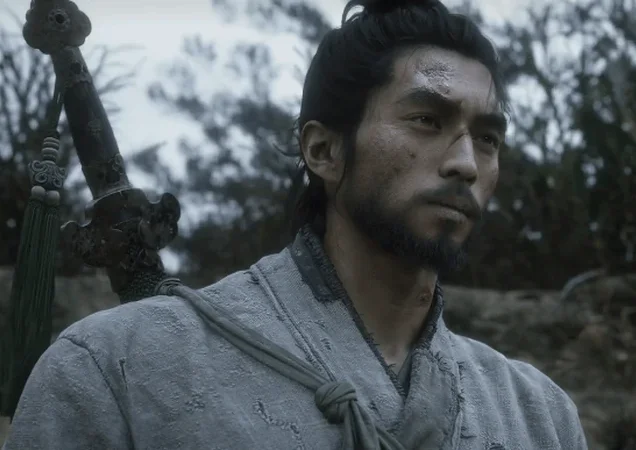
Extremely realistic visuals from the Black Myth: Zhong Kui trailer
Zhong Kui is one answer.
But certainly not the only one.
The list of projects and IPs being explored by China's game industry continues to expand: wuxia, mythology, history, Classic of Mountains and Seas, Romance of the Three Kingdoms, Taoism, Buddhism, and countless figures from Chinese folklore.
Black Myth may not be a single game.
It may be a sign of an entire new ecosystem of Chinese cultural IP.
China Has Actually Been Exporting Games for a Long Time
One point that should be avoided is looking at Wukong as if China has only just entered the international game market.
That is not true.
Chinese companies have already achieved major success with products such as Genshin Impact, Honkai: Star Rail, Naraka: Bladepoint, and Honor of Kings. According to China's game industry reports, revenue from games developed by Chinese companies and generated in overseas markets reached $18.557 billion in 2024, an increase of 13.39% from the previous year.
What makes Wukong special is that it opens another door:
Premium AAA, console, and single-player games.
China has long possessed enormous strength in mobile games, but the premium AAA market has historically been dominated by the United States, Japan, and several European countries.
Black Myth: Wukong demonstrates that China does not necessarily have to compete only on the playing field where it is already strong.
It can enter a new arena.
And once it does, the cultural value traveling alongside the product also changes.
But China Is Not the Only Country to Recognize This Power
In reality, many other countries are also using games as a means of bringing their history and national identity to the world.
Poland: Turning History Into a Global Game
The Witcher is a famous example of how a regional culture can become a global IP.
But a case closer to Wukong is Czechia's Kingdom Come: Deliverance.
The game was developed by Czech studio Warhorse Studios and is set in 15th-century Bohemia, using real historical locations and events.
Its sequel, Kingdom Come: Deliverance II, continues this approach by placing Kutná Hora — a historic Czech city and UNESCO World Heritage Site — at the center of the game's world.
The Czech tourism authorities have even organized tours, cosplay activities, historical events, and the "Kingdom Come Live" project, directly connecting the game with real-world tourism.
Czechia is doing something remarkably similar to Shanxi:
game → fan community → tourism → cultural experience.
Japan: Culture Is Exported Even When It Is Not Called "Cultural Promotion"
Japan has been doing this for a very long time through manga, anime, and games.
Samurai, ninja, Shinto, kendo, Edo architecture, yokai, and traditional folklore have all become part of the global imagination.
Ghost of Tsushima is a particularly interesting example, even though it was developed by an American studio. Sucker Punch has said that the development team repeatedly visited Tsushima itself, recorded natural sounds, scanned vegetation, and used field research to construct the game's version of the island.
Similarly, the Assassin's Creed series, although developed by Ubisoft, has transformed historical cities and civilizations such as Egypt, Greece, Italy, and France into interactive worlds that players can effectively "visit."
Scholars have even used the concept of virtual heritage tourism to describe this phenomenon.
This demonstrates something important:
A game does not necessarily need an explicit promotional campaign to become a tool of cultural export.
As long as players love the world inside the game, they will naturally seek to discover the rest.
India: A Vast Mythological Heritage, but the AAA Challenge Remains
India is also seeking to bring its mythology and indigenous visual arts into games.
Raji: An Ancient Epic, developed by Nodding Heads Games, draws on Hindu mythology, gods, demons, and Indian art.
The game's developers have explicitly said that from the beginning, they wanted to create a game representing Hindu culture — something they felt was still missing from the gaming industry.
This is an important example because it demonstrates that possessing rich cultural heritage alone is not enough.
India has an enormous mythological treasure.
But transforming that resource into a global phenomenon on the scale of Wukong requires capital, technology, AAA development teams, marketing capabilities, console distribution, and — most importantly — a product compelling enough even for people who have no prior interest in Indian culture.
Raji demonstrates the potential.
Wukong demonstrates how far that potential can go when combined with AAA production capabilities.
The Biggest Lesson: Don't Sell "Culture" — Sell a Product People Want to Use
This may be the most important lesson from China's experience.
A country can spend enormous amounts of money promoting its culture.
It can build websites.
It can organize exhibitions.
It can release documentaries.
It can purchase advertising overseas.
But all of these approaches have one weakness:
The audience has to actively receive the cultural message.
Games are different.
Players do not buy Black Myth: Wukong to learn about Chinese history.
They buy it because the game looks exciting.
They play it because of the combat.
They become curious because of the bosses.
They explore because the world is beautiful.
Then culture enters their minds almost naturally.
This can be called cultural export through experience.
And it is more powerful than simply saying:
"Come and see our culture."
Because a game says:
"Step into our world."
China Is Moving Toward a New Model of Cultural Export
For decades, Chinese culture reached the world primarily through a handful of familiar symbols: Kung Fu, pandas, cuisine, tea, wuxia, and Journey to the West.
But the structure is now changing.
Online games expose players to Chinese culture every day.
AAA games bring them into worlds of mythology and history.
Web novels create IP.
Film and animation continue to expand those IPs.
Music, merchandise, exhibitions, and tourism extend the life cycle of the IP after users leave the screen.
In 2026, Chinese state media even described online literature, web dramas, and video games as a "new trio" becoming important drivers of international cultural outreach.
Black Myth: Wukong was reported to have surpassed 30 million copies sold, with more than half of its sales coming from outside China.
And even after players have finished the game, the ecosystem continues to operate.
In 2026, Black Myth: Wukong was also brought to concert stages in the United States, with performances combining Western symphonic music, traditional Chinese instruments, and imagery from the game. The Los Angeles performance attracted thousands of spectators.
This is no longer merely a video game.
It has become a cultural IP.